
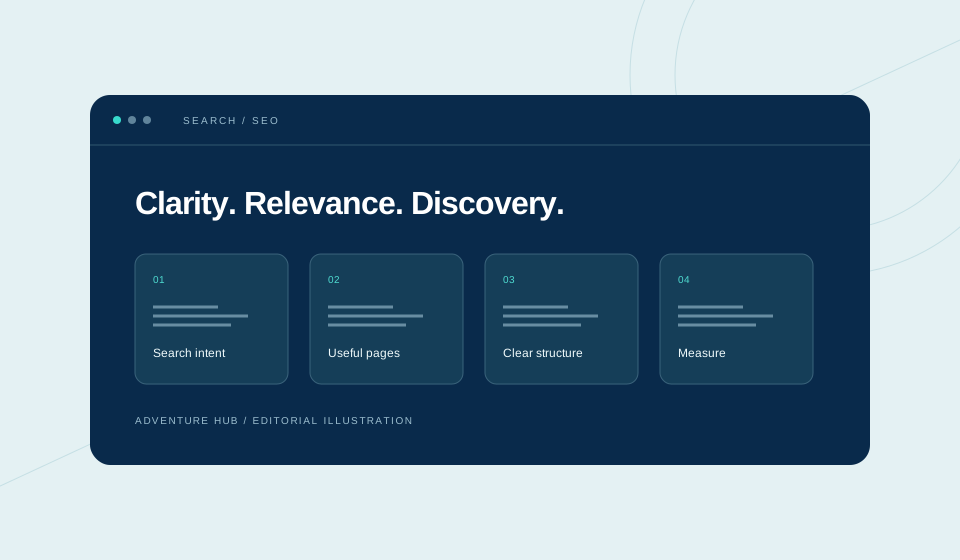
SEO for an outdoor business begins with a clear description of the experiences it actually provides. People search with different needs: inspiration for a destination, information about suitability or a specific activity they want to book. A useful plan connects those needs to pages that can answer them. Technical work helps make the pages accessible and understandable, while measurement shows whether the resulting visits contribute to the business. Neither a checklist nor a plugin can guarantee a ranking.
1. Separate research questions from booking intent
Group searches by the decision behind them. “What to bring on a guided hike” asks for preparation advice. “Guided hiking near a destination” may indicate comparison. A search for a named operator and activity may indicate an immediate booking need. These examples are hypothetical intent categories, not keyword-volume research.
Use customer questions, existing enquiry records and available search data to choose priorities. Assign each important intent to a suitable page instead of inserting the same phrase everywhere. A practical guide can answer a preparation question, while an activity page explains the specific experience. Link between them where the connection helps the reader, not simply to increase the number of links.
2. Make activity pages genuinely useful
Explain the experience, place, duration and participation requirements clearly. Include accurate practical details and original material the operator can stand behind. If you describe an activity as suitable for a particular group, explain the relevant conditions rather than relying on a vague label.
Google’s guidance on helpful content emphasises information created for people and encourages publishers to assess its reliability and usefulness. For an operator, that means answering real questions with verified knowledge. It does not mean padding each page to a supposed ideal length. Avoid creating many nearly identical destination pages for services you do not actually provide.
3. Give the site an understandable structure
Use a logical hierarchy: activity overview, individual activity pages and supporting guides. Keep page titles specific and headings meaningful. A visitor should understand the topic before reading several paragraphs. Write descriptions that accurately summarise the page rather than promising an offer absent from the content.
Use internal links with labels that describe their destination. A preparation guide can link to the relevant activity; an activity can link to a genuine booking route or enquiry. A website structure designed around customer tasks makes these connections easier to maintain. If a redesign changes established URLs, create a considered redirect map before the new version is published.
4. Check access before adding more content
A technical review should answer basic questions first. Can the intended public pages be reached? Are important links usable? Are the correct versions of URLs identified? Does the mobile layout expose the essential content? Are images unnecessarily large or forms difficult to operate?
Use Search Console when authorised to inspect the site’s actual search and indexing data. Keep development copies private and excluded from indexing. At release, review the production settings explicitly rather than assuming a staging configuration is appropriate. Structured data should describe visible, accurate information. It should never introduce invented ratings, credentials, locations or prices as a shortcut to a more impressive search appearance.
5. Measure the contribution to the business
Establish a baseline before changes. Track relevant impressions and clicks, landing pages, qualified enquiries and completed bookings where measurement is available. Keep branded searches separate from broader discovery queries when interpreting trends. A rise in traffic is useful only in context: does it reach the audience and activity the business can serve?
Review results alongside seasonality, available dates and changes to promotion. Compare equivalent periods where possible and record what changed. A click on a booking button is a different event from a completed reservation. Avoid reporting the former as revenue. Early measurement may reveal a conversion problem or an unclear offer rather than a need for more search traffic.
6. Work through a focused improvement cycle
Choose a manageable set of priority pages. Correct technical barriers, improve the missing information and add supporting content only where a real question remains unanswered. Assign an owner and a review date so that practical information stays accurate.
Set expectations around the work you can deliver, such as improved page structure, documented changes and a useful report. Search visibility remains influenced by competition and systems outside the supplier’s control. If your business needs a structured starting point, explore Adventure Hub’s SEO service and request a scope based on your actual website. Evidence should guide the next action, including the decision to stop an unproductive activity.